Episode 96
Tommy King – Butchery, Darts & Painting Boyle’s History
HOSTS & GUESTS
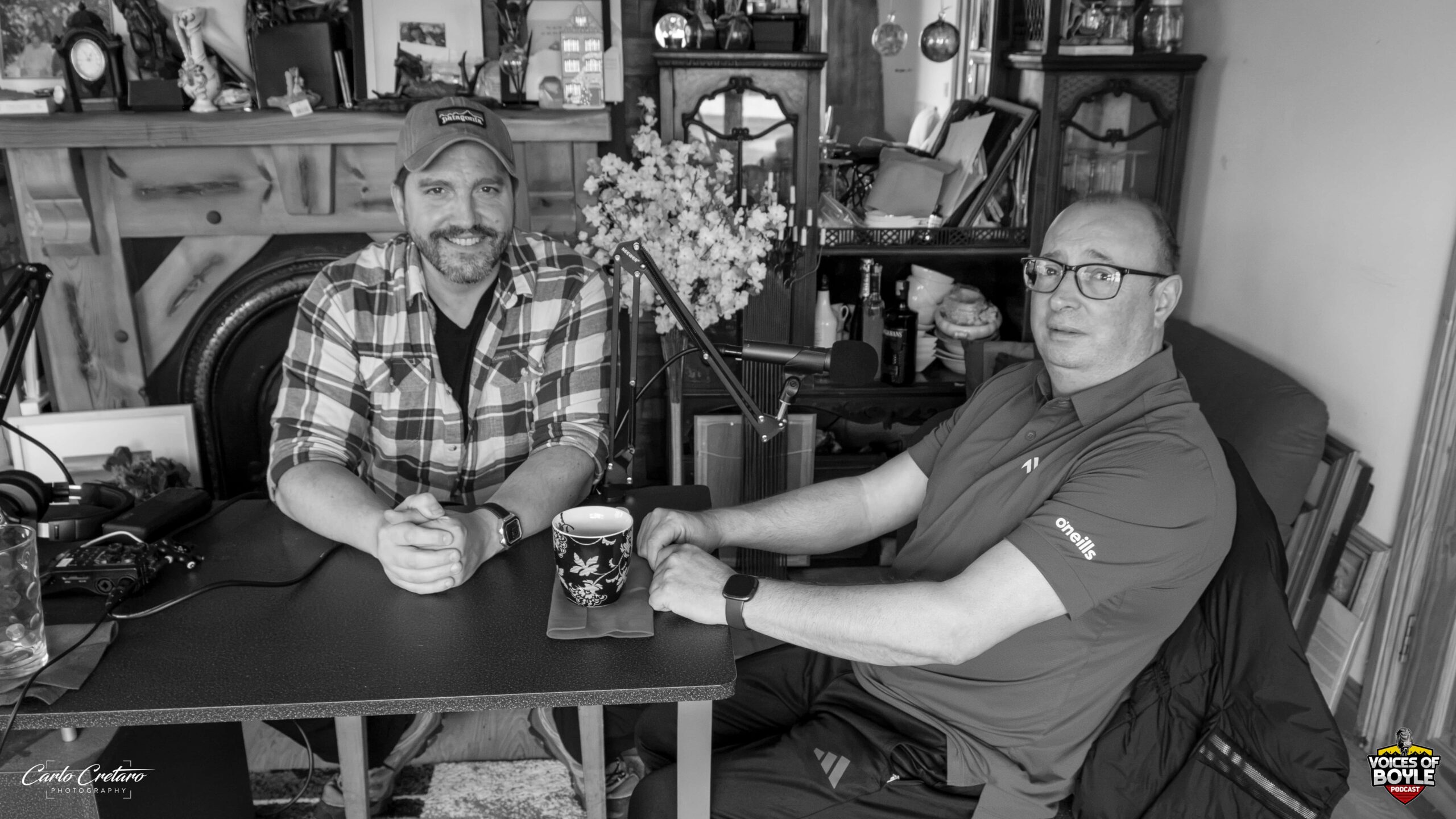
Carlo Cretaro
Tommy King

Carlo only found out the night before the recording that Tommy King’s parents used to run a shop out of their front room. Milk, bread, the sweets for the kids on the street, a bit of everything except frozen goods.
“It was the type of shop that you could find anything at any stage in it.”
It opened around 1979, when Tommy was in second or third year in St Mary’s College. He is surer about the hours, because there were none.
“Would you have any milk?”
You could knock at seven in the morning or eleven at night, and people did. Mostly it was the older neighbours from lower Marion Road, who preferred a local shop anyway and did not want to walk into town. There were no supermarkets open late then, and hardly any supermarkets at all. At lunchtime it was the students, a steady stream of them coming across from St Mary’s between one and two.
There was no register. It was a tin box, and Tommy is careful to add that the taxman had to be paid regardless. There was a tab too, because it was the eighties and money was scarce. Tommy worked in it when he was around, which was not often, between darts and snooker and football.
The shop closed in March 1995, when his father died.
“Winner stays on”
Summers were spent outside. Five a side in the Pleasure Ground, ten or fifteen lads, winner stays on. Somebody always got injured on the tarmac, knees dug out of them, and the spare man was brought on whether he liked it or not. Then there were the street leagues, Churchview against Marion Road against Termon and Forestview and the Carrick Road, with no governing body at all. Some of the main players would just decide a league was starting.
Asked for the best footballer of his age that nobody outside Boyle would have heard of, Tommy does not hesitate. Hughie McFadden. You could give Hughie the ball in front of your own goal and he would go up and score at the other end.
“You’d still be wet coming from the pond”
Assylin and the pond were the one place you were told never to go. Everyone went. You came home, said you had been in the Forest Park or down playing football, and you were still wet from the pond. Nothing more was said. Tommy has never known the reason for the rule, and he notes that a lot of people learned to swim up there, whether they liked it or not.
“Jeans and long hair”
He started school at just four, which made him one of the youngest in his year. He liked woodwork and technical drawing and was good at them. Metalwork was all right, apart from one day, when the teacher told him: “King, I don’t like lads with jeans and long hair. Get out.” Tommy will not name him, because the man is still around. He also admits to a good few Thursdays off sick, because Thursday was the day for Enniskillen.
“Get trimming”
In 1984, at a Manpower meeting in the Royal Hotel, Tommy heard about a butchery apprenticeship with Stanley Taylor. He went up to Stanley and got the job straight away, on £30.30 a week through AnCO for four years. It was not much money even then, but he got his trade out of it, and he says Stanley was very good to him.
On the first morning he was outside in plenty of time, in nice clean clothes. Stanley opened the door and the first thing that hit him was the smell of meat and of bleach. Stanley threw a pile of meat onto a block, handed him a knife and told him to get trimming. Tommy went slowly, because taking the tops off his fingers on the first day would not have been a good start. He was not let serve anyone, because he did not know the cuts yet.
Then Stanley had another nice job for him. There was a pickle barrel in the cold room with the bacon at the bottom. Would he dive down and get it?
“My hand went numb nearly straight away, up to my elbow, up to my shoulder.”
By the time he was done he could not feel his fingers, and Stanley was laughing at him. That was his job every day for the first couple of weeks. At closing there was a third job, scrubbing the two chopping blocks with a wire brush, five minutes each. It fairly knocked the sweat out of him.
“It was the done thing”
There was sawdust on the floor, for the blood and so nobody slipped. Tommy says there were hygiene reasons for it, strange as that sounds now. Stanley got meat from Caniff’s in Ballaghaderreen and killed some of his own. Tommy helped with the slaughtering on a few occasions over the years and found it a horrible job.
Lambs’ hearts sold, and the big beef hearts were usually minced for a dog. The beef livers from Stanley’s own killing were huge and went for about a pound to people with dogs. Carlo points out that liver is the prized cut abroad. Tommy says the Irish way of thinking is just different: we always want the best, even when we cannot afford it.
Christmas week was uproar, with the cold room full to the gills and Tommy and Mary Higgins flat out. He heard plenty across the counter over the years, and he is not going to repeat any of it.
“He knows what you want”
Boyle had a good few butchers then. Stanley’s, Jim Barry’s below where Daly’s was, O’Dowd’s on Patrick Street, Dominic Kevney’s, a meat counter in DH Burke’s and a bacon counter in Dodd’s. Now, as Carlo says, Pádraic McGrath’s is the one independent butcher left, since Country Meats closed. Tommy thinks that is a terrible thing, because your own butcher knows what you want.
“He’ll make sure it’s right, otherwise you won’t be back.”
Halfway through his training Jim Barry poached him, for one day. That was as much as he could manage, and he went back to Stanley’s. Carlo calls it a very short transfer window. In 1988 he moved to DH Burke’s for better money. Later he did days for Liam Dermott in Frenchpark and spent a good few years with Cyril McHugh in Strokestown, a funny man with two hearing aids. Tommy and another lad, Patrick Dooner, worked out that if they talked very low, Cyril would turn the hearing aids up to listen in. Then they would shout. Tommy says that is what he got for being nosy.
He left butchering in 2006.
“They didn’t want to play”
Darts started with a toy board from Santy. The first proper board was in the Catholic Club, now the Family Life Centre, where Paddy McDonagh was caretaker. Tommy went down for the snooker and ended up playing more darts. That first Christmas there was a darts competition and he put his name down first. A week later Paddy came over and handed him a trophy.
“When they seen your name down, he said they didn’t want to play.”
It is the first trophy he ever won, and he still has it. He also remembers the card game in the corner, where you had to keep very quiet, and the men at it, Carlo’s father among them, with Ned Moriarty, Tom Wynne and Donald Costello the milkman.
“A piece of nostalgia”
Boyle had more than 30 pubs at one stage, and a good few had a board. Tommy played for the Drift Inn, then Creighton’s, then Matt Smith’s, where Matt was into the bigger competitions in Clondra and at Walsh’s in Charlestown. The Boyle league was Thursday nights, about eight teams, three doubles and six singles, all best of three. At weekends you played for a bottle of whiskey or a tenner.
He names Joe Ford, Willie and Eugene Suffin and Kevin Regan among the best. Eugene and Kevin still play on a Thursday in Creighton’s, with younger lads like Richard Lloyd and Gavin, and Tommy goes in every couple of months. He says you are nearly relaxed the moment you walk in. The darts started to fade in the early nineties as the pubs closed, but he has seen trials for Roscommon A and B teams on Facebook, and he thinks it is coming back.
“Just to help you relax”
In 2006 Tommy went from butchering straight to Coca-Cola in Ballina, where he worked in the warehouse, the sample lab and the concentrate rooms, ran a relabelling area, and was put back to college for a degree in food science. He says the Ballina plant is the company’s biggest concentrate plant in the world and employs a good 500 people.
Around the time COVID arrived, a virus did a lot of damage to the right side of his head. It was not COVID; he was tested twice. It took the hearing in his right ear and his balance, and left him with vertigo and a low tinnitus that never goes away. For a while he was on crutches. He is still on Coca-Cola’s books but the company doctor has not cleared him to go back yet. He hopes to. Carlo mentions he has read about a possible link between Bluetooth headphones and tinnitus, though he says he has not looked into it much.
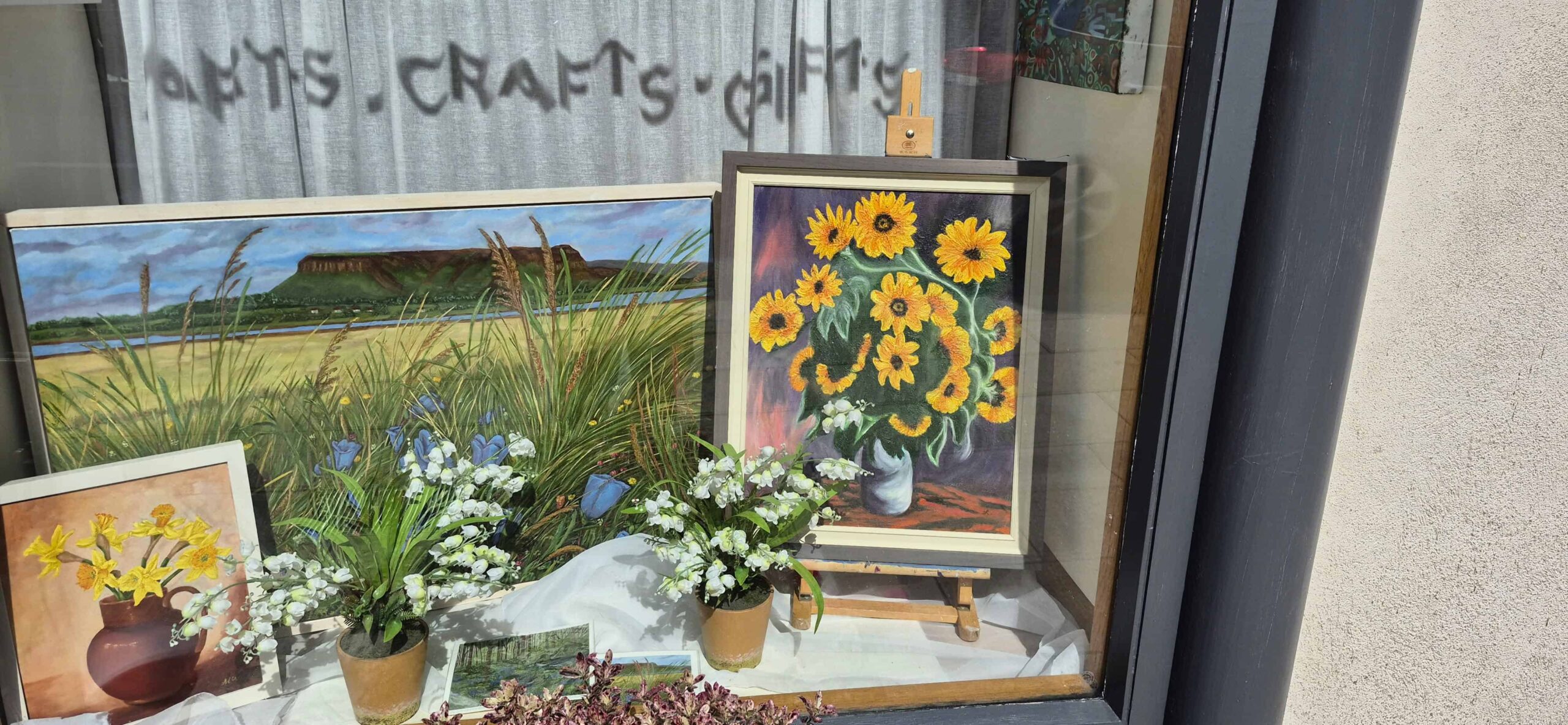
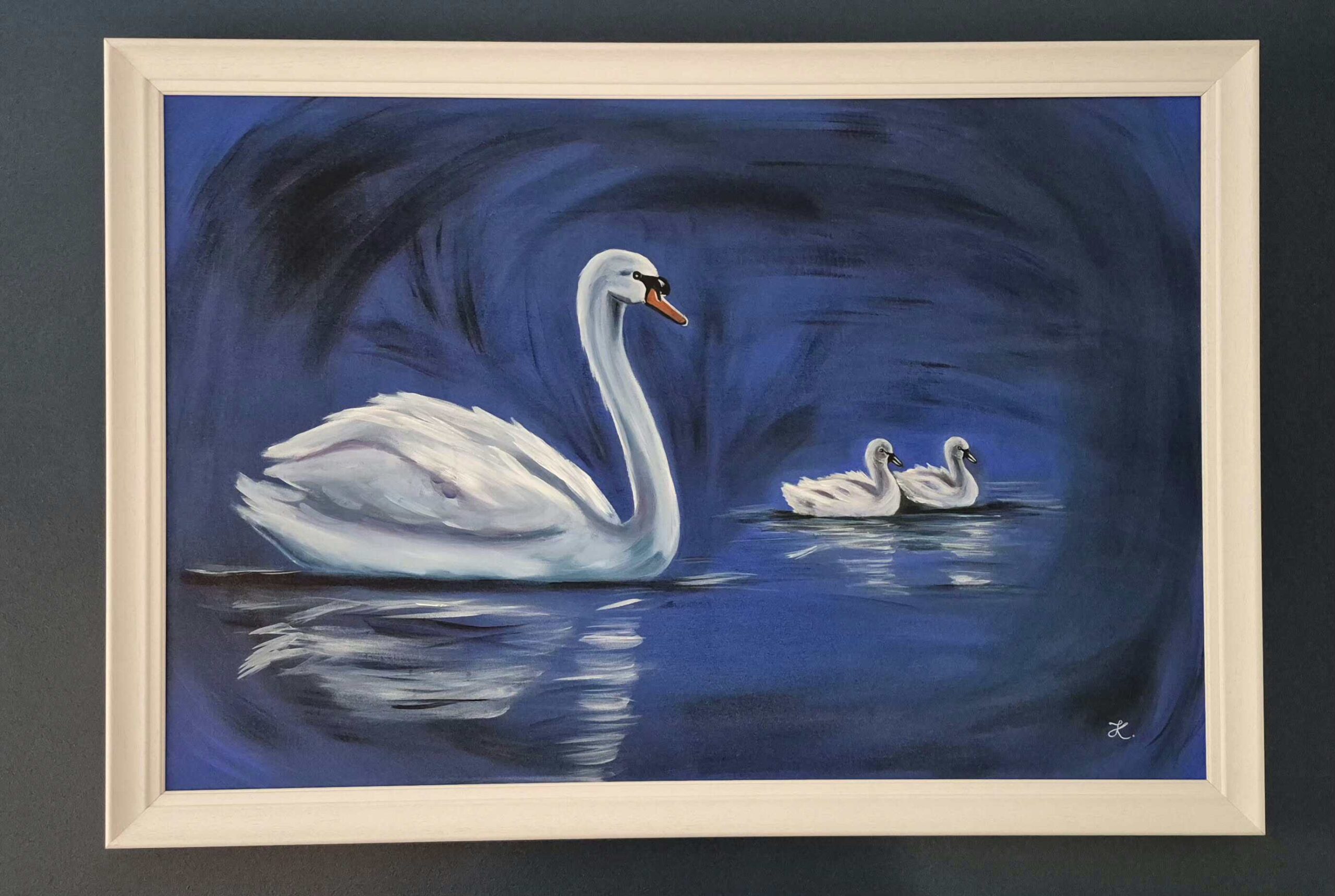
It was his wife who suggested painting, to help him relax. His easel is in a pod in the back garden, and he can spend hours out there.
“The moment you sell your first painting”
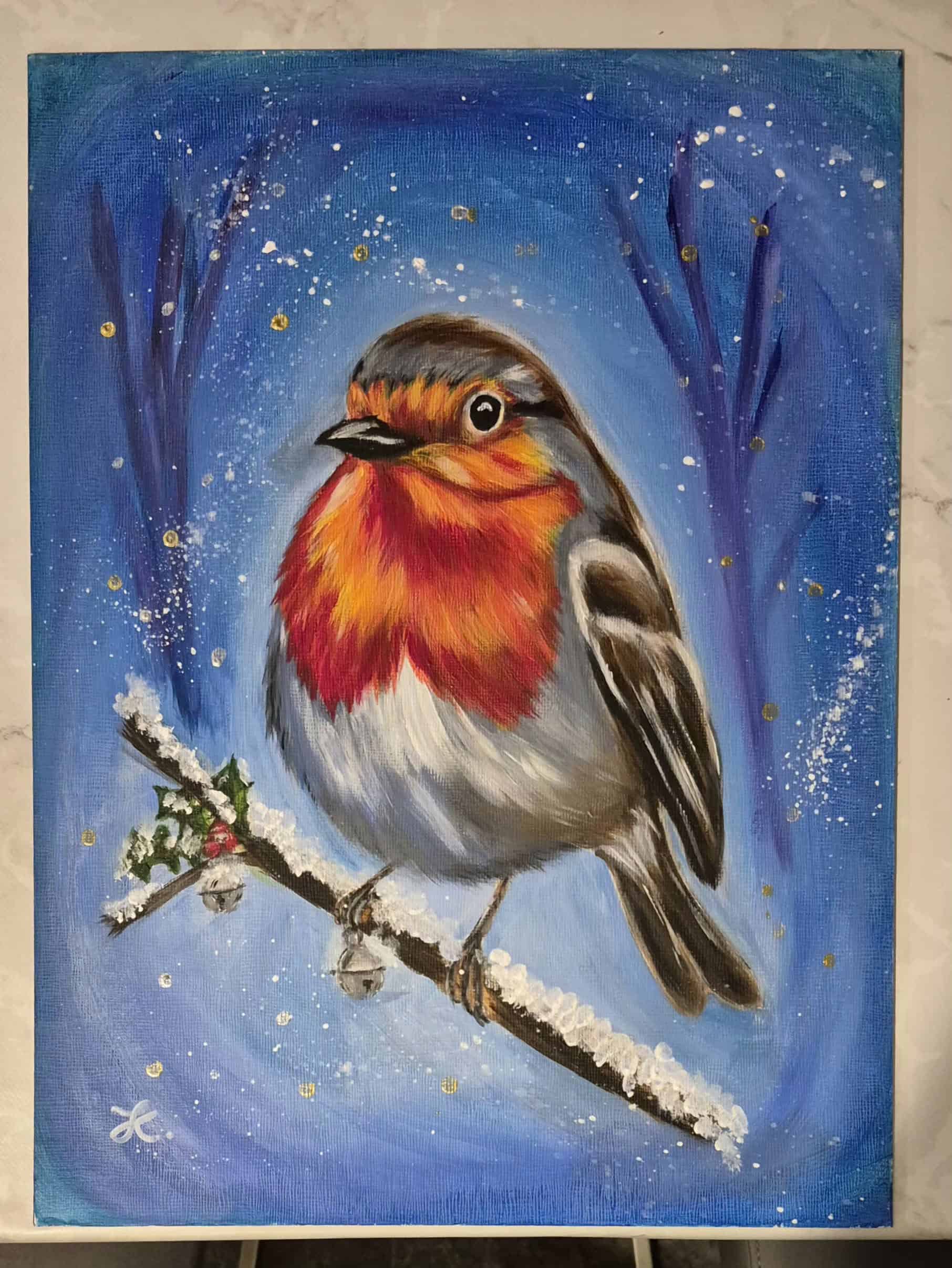
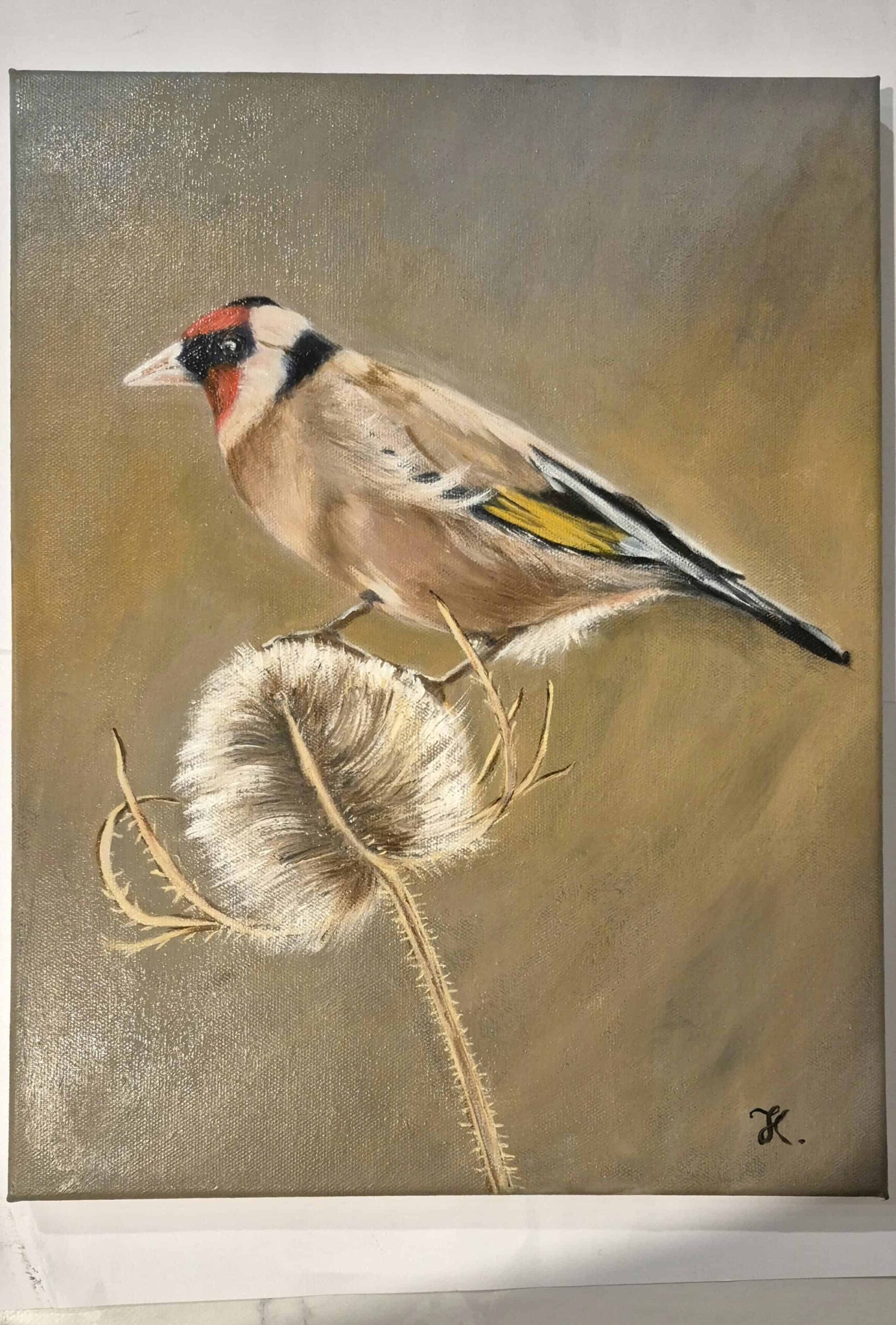
The only art he had done before was in 1982, when three or four boys from St Mary’s went down to the girls’ convent for classes. This time his first painting was a robin, for someone who asked. Then a goldfinch for his mother-in-law, who has bird feeders behind her house and was in hospital after a stroke. Birds stuck.
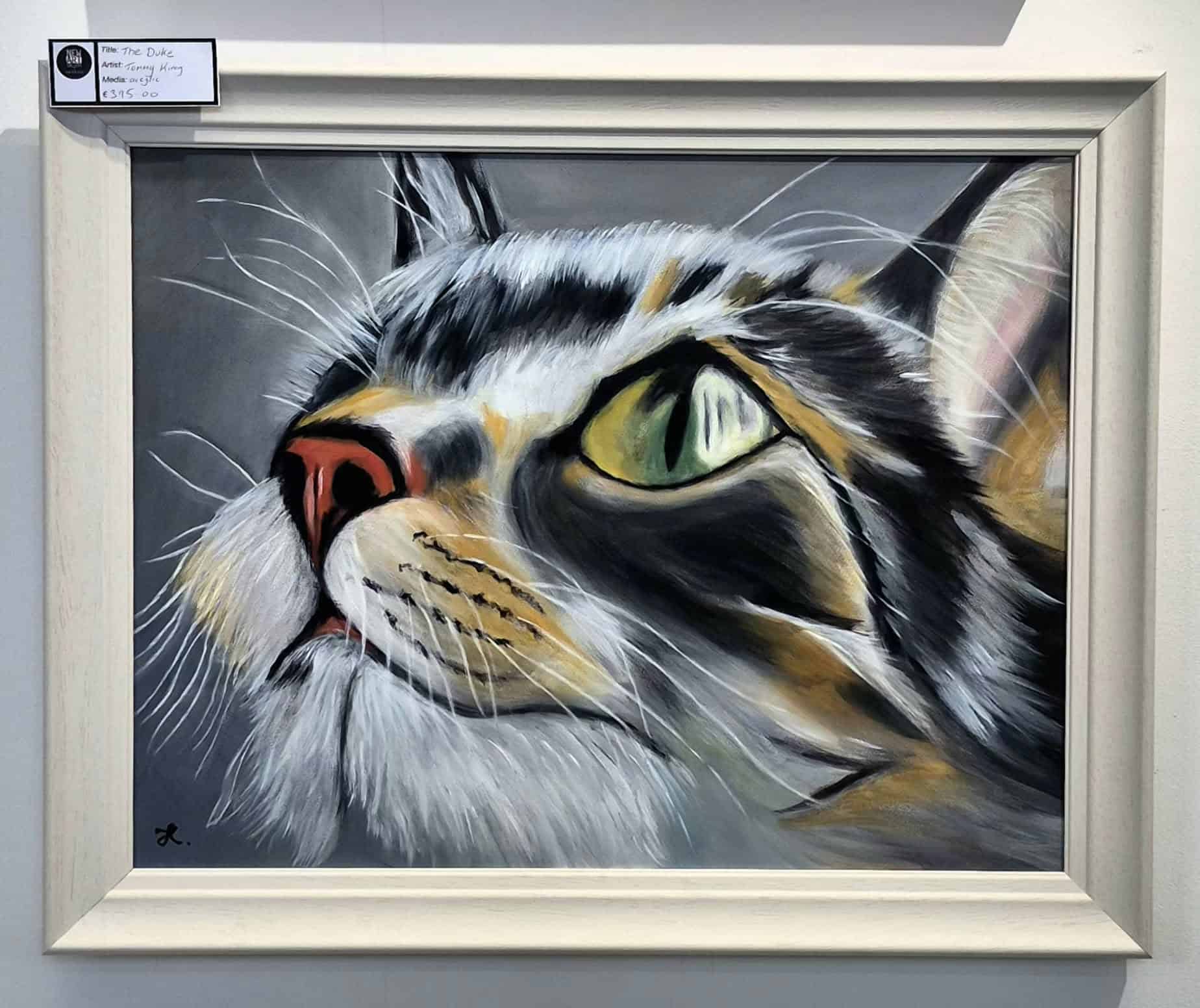
He went into the New Art Gallery one day to ask Elizabeth Valentine how to price a few pieces. She looked at what he had and asked him to join. He walked out with a smile on his face. He does Friday afternoons there now, and his daughter Leanne comes in with him. He calls her a slave driver.
“They say the moment you sell your first painting, you are an artist.”
He has sold a few. His first buyer could not choose between three paintings that made a set, so they took all three. He still calls himself a novice. Carlo does not agree. Tommy says to ask him again this time next year.
“The church that I made my communion in”
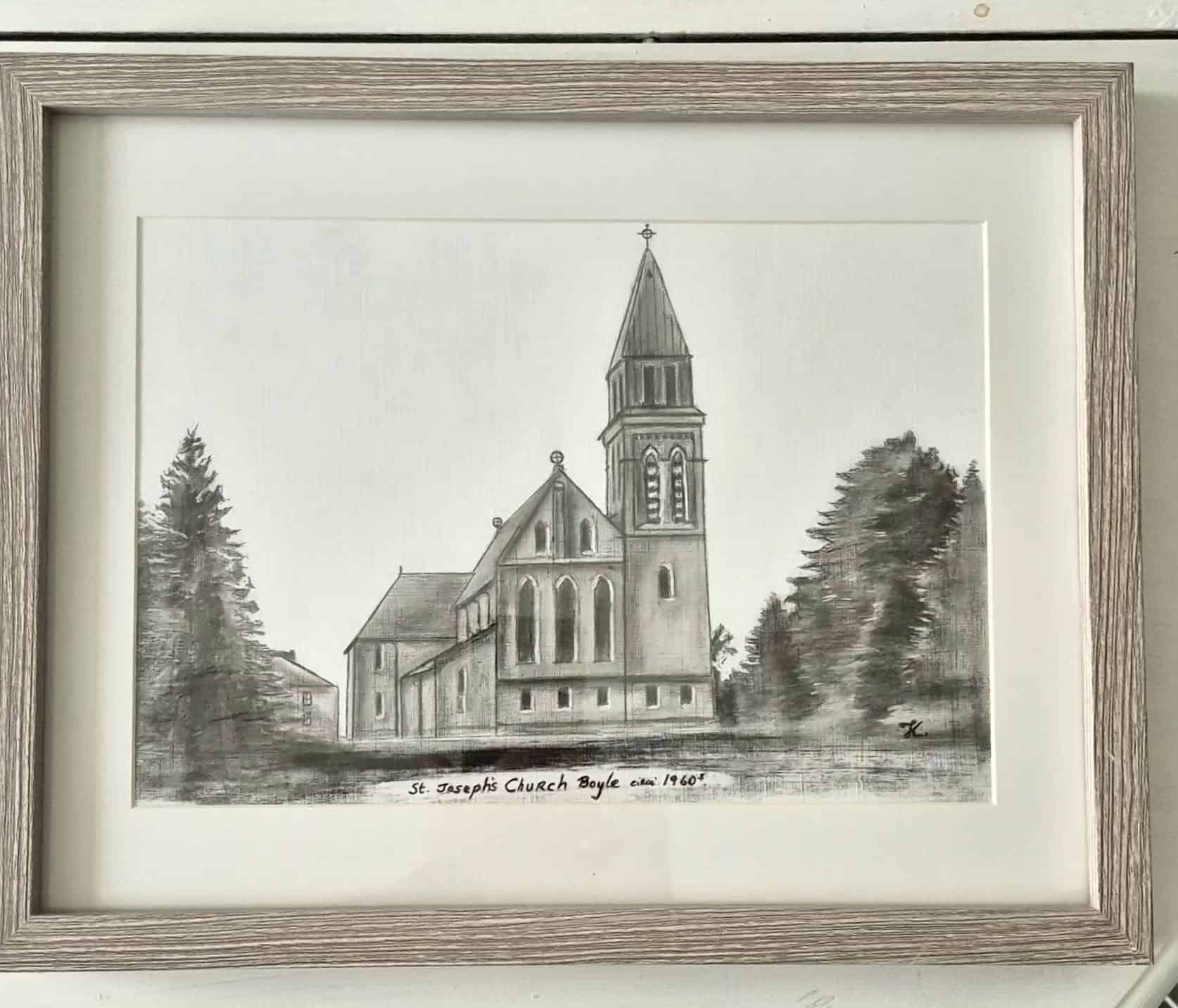
His recent sketch is of St Joseph’s Church, the old church with its spire, from a late 1960s photograph by Richard McGee. Tommy went to school with Richard’s son Brendan, who went through the photographs with him. The church burned in 1977.
Carlo puts it to him that he has drawn a building that is not there anymore, from a photograph by a man who is not here anymore. Was he making a picture, or keeping something? A bit of both.
“It’s nice to have a bit of history that’s not there with us anymore.”
The Abbey and one of the Rockingham gates are next. His advice to anyone thinking of starting is to go for it. Art is all about confidence, he says, and there is nothing to lose and all to gain.
Listen to the full episode
The conversation runs to about 67 minutes, and also takes in the 1978 World Cup final, Feely’s lunchtime football, Matt Smith’s back room, and Christmas turkeys.
Thanks to Brendan O’ Dowd for creating and recording the musical piece for the podcast.
Keep Listening…
Ep 97: Ruth Regan
Episode 97 Ruth Regan - A Dive Into The ArchivesHOSTS & GUESTS Florence Cretaro Ruth Regan RESOURCES Years ago, a man being held in the Bridewell behind Boyle courthouse asked the jailer to let his wife in. It was a busy time on the farm, he...

EP 95: The Aldi Project
Episode 95 Jane Suffin & Paul Forde - The Aldi Project in BoyleHOSTS & GUESTS Florence Cretaro Carlo Cretaro Jane Suffin Paul Forde RESOURCES Join the Boyle Community Hub (Facebook) The German visitors had seen the signs on The Crescent and came...
Ep 94: Andrea Cosgrave
Episode 94 Andrea Cosgrave - Family Travel & Making MemoriesHOSTS & GUESTS Florence Cretaro Andrea Cosgrave RESOURCES Andrea's Instagram Page In the early spring of 2020, Andrea Cosgrave set up a travel account on Instagram. She had been thinking...
BE A GUEST ON THE SHOW!
If you’ve a story about Boyle, we’d love to hear it. You don’t need to have done anything remarkable, and you don’t need to prepare a thing. We sit down, have a chat, and you talk about whatever you want to. It usually takes about an hour.
Thinking of someone else? A parent, a grandparent, a neighbour who remembers how it used to be? Tell us about them. Some of our best episodes started because a son or daughter got in touch. You can find us at info@voicesofboyle.com.